Showing posts with label Seattle Mariners. Show all posts

Tuesday, September 30, 2014

The Year of the Pitcher Part II

As I was writing Saturday's post about the history of Tiger Stadium, I started to peruse the 1968 Tigers, the same year Denny McLain won 31 games (we won't see a 30 game winner for a very long time) and had an ERA of 1.96. As I gathered myself after being blown away so fiercely by these stats, I remembered that was also Bob Gibson's Cy Young winning year of 22-9 with a 1.12 ERA in 304 innings. If you were to Google "Year of the Pitcher" the first hit is the 1968 MLB season, which doesn't really surprise me considering McLain and Gibson both won Cy Young Awards and MVP awards that year. But check this out:

  • That's the first and only time that both Cy Young winners were named MVPs as well. There have been 10 pitchers to win both awards in the same season, but never in both leagues.
  • Since the award has been given to both leagues in 1967, Bob Gibson is the only National League pitcher to win both awards (Sandy Koufax and Don Newcombe, both Dodgers, won CYA and MVP but before there were 2 CYA).
  • Bob Gibson's 1.12 ERA is the 4th lowest single season ERA ever. The next closest ERA for a pitcher after 1920 is Greg Maddux's 1.559 ERA in 1994.
  • McLain is the one of 2 pitchers with 31 wins in the Live Ball Era and the only one with 30+ after World War II (Lefty Grove won 31 games in 1931).
  • The 1968 World Series featured 3 complete games each from Mickey Lolich and Bob Gibson - the only time that has ever happened.
So 1968 was clearly the Year of the Pitcher. But what's the runner-up?

Answer: 1995. Winners: Greg Maddux (19-2, 1.63) and Randy Johnson (18-2, 2.48).

After the grudge match of the 1994 strike that resulted of the fans being stripped of a World Series, baseball came back with a bang. In 1995, the Indians' Albert Belle became the only person in baseball history to have a 50 home run-50 double season, Atlanta continued their tirade on the NL East, finishing 21 games ahead of the 2nd place Mets and Phillies, and future Hall of Famer Barry Larkin won his only MVP award, hitting .319. With an abbreviated 1994 season, fans simply missed the game. Any action would have been nice to see, but a pair of 2-loss seasons from the greatest pitchers of the last 30 years blew us all away. Welcome back, baseball.

It wasn't quite the level of 1968 where Gibson had an absolutely absurd ERA and McLain had an absolutely absurd win total, but I think that these seasons are just as impressive. Think about baseball in the 60s, there weren't a whole lot of huge sluggers around; Aaron, Mays, Schmidt, an aging Mantle, and Killebrew were really the brunt of the power. Compared to 90s, with McGwire, Canseco, Sosa, Bonds, Griffey, Thome, A-Rod, Albert Belle (in 1995 at least), there were sluggers popping up left and right. Sure a lot of them were steroid users, but doesn't that make Maddux's 8 home runs allowed over 209 innings all the more impressive? I think so (of course I do, I'm the one writing). I'll share some quick highlights about both of their seasons and why 1995 was the Year of the Cy Young Pitcher Part II.

Maddux
Mad Dog was always praised for his durability. Among all his league-leading stats, he led the league in starts the most, with 6 times (including when he was 39). In fact, except for his rookie year, Maddux made at least 25 starts every single year he ever pitched. But in 1995, he only started 28 times, and he made the most of those starts. 

  • On June 15th against Montreal, Maddux only needed 87 pitches to shut out the Expos. 
  • From May 12th to July 29th he didn't hit a batter.
  • From August 26th to the end of the regular season he didn't allow a home run. 
  • He was 13-0 on the road with a 1.12 ERA in 15 starts. 
  • He had a .21 ERA when the Braves scored between 0-2 runs (1 run in 5 games) with a 17:1 strikeout to walk ratio.
  • He allowed only 8 2nd inning hits all year (random, I know). 
  • He was 7-0 against the NL East with a 1.62 ERA. 
Unbelievable.

Johnson
Johnson won his first of 5 Cy Youngs in 1995, going 19-2 with a 2.48 ERA (terrible compared to Maddux, but still led the AL). He also struck out 294 batters, most in the Majors by 58 K's (almost 6 games worth). It went Johnson 294, Nomo 236, Stottlemyre 205, and that was it for people over 200. He blew away both batters and other pitchers with how dominating his 6' 10" frame was coming down on them. Let's delve.

  • In 1995, Johnson had 16 10+ strikeout games. 
  • He averaged 119.8 pitches per start (including a rain delay game in which he threw 37 pitches), including 141 in back-to-back starts in June and 160 in a complete game against Cleveland. 
  • He faced 866 batters, not even cracking the top 10. This means he struck out 30.5% of the batters he faced, compared to Maddux's 23.5%.
  • Tale of two pitchers: when Johnson got hit, he got hit. In his two losses, his ERA was 9.45 versus 1.48 in wins. 
  • He had a .164 batting average against with runners in scoring position.
  • He was 6-1 against the AL West with a 2.55 ERA.
Who had the better season? I'd go with Maddux, he was simply systematic in the way that he handled other teams. While Johnson was a workhorse (not wild, but threw a lot) and struck out half the block, Maddux (the younger of the two in 1995, surprisingly) was a machine. Incredible strikeout to walk ratio, incredible WHIP and ERA, and 13-0 on the road? It's no wonder the Braves won the World Series that year. 

Here's a fun fact about this pair of Cy Young winners: it is the 3rd furthest distance between the winners' teams (Safeco Field to Turner Field [the Braves didn't begin playing there until 1997 but Atlanta-Fulton County Stadium is no longer standing] is 2,636 miles) and furthest since the Padres' Gaylord Perry and Yankees' Ron Guidry in 1978 (Yankee Stadium to Qualcomm Stadium is 2,766 miles).

Enjoy the playoffs, folks. Tonight kicks off the postseason with Kansas City and Oakland in the AL Wild Card game. Though Lester has been a great pick up for the A's, I think Big Game James stays true to his name and pitches lights out for the Royals to send the A's packing. 

But then again, I didn't even have the Angels or Royals in the playoffs. Take me with a grain of salt.

Thanks for reading. 


Wednesday, September 17, 2014

More on Ichiro

After my post about Ichiro's Platinum Season, I had a conversation with my friend (okay let's be honest, this is how all these blogs start. From now on, he'll be known as Jon) about Ichiro's career and comparing him to other folks in the Majors and the work they've done. I mentioned in my post that Ichiro has over 2,800 hits in America, and over 4,000 total in professional baseball - and here is where Jon's wisdom set me off again: could Ichiro have surpassed Pete Rose's all-time hits record?

Honestly, I think a lot of it depends. Let's see if I can give you some evidence to make you decide for yourself.

Ichiro's Favor
1. Speed. Pete Rose is known as Charlie Hustle, but Ichiro's left-handedness (3 or 4 fewer feet to run to first), swing style,
Ichiro is already a few steps to first while making contact with the ball. 
and pure speed aided him in getting infield hits. Pete Rose didn't have the speed to beat out a chopper to short, but he did have the hustle to stretch a single into a double. At that point, a hit is already a hit, it's just for slugging percentage. But on any random groundball to the left side, Ichiro has a much better chance at beating it out than Pete Rose because he's faster and has a shorter distance to run. This also made him a stealing threat (led the league in 2001 and is the active leader in steals) while Pete Rose only has 198. 


2. BABIP. BABIP, or batting average on balls in play, is a stat used by sabermetricians to determine a players' effectiveness when they don't strike out. It's useful for guys like Ryan Howard or Adam Dunn, because it seems like they either hit it 450 feet or strike out. BABIP is used to show their average on when they make solid contact. As of 2009, Ichiro's BABIP was insanely higher than the league average on ground balls (.242) and bunts (.441). Ichiro's averages: .305 and .663, respectively. This means out of 1,000 ground balls, Ichiro reaches base safely 63 more times than average Joe. On 1,000 bunts, he reaches 222 more times. On a larger scale, Ichiro's career BABIP is .344 compared to Pete Rose's .319. Ichiro has 453 career infield hits, just around 16% of his hit total.  

3. Age. Ichiro entered the league at age 27, basically his athletic prime. He's still in great shape, but the hits aren't coming in bunches like they used to, and that's to be expected when you hit the dinosaurish landmark 40th birthday in the sporting world. Ichiro has played 2,184 career games in the MLB and has amassed 2,834 hits. In 2,184 games, Pete Rose collected 2,773 hits - 61 fewer hits is about a quarter of a season for these guys. Bear with me, this is where it gets confusing. Through 2,184 games (odd sample, I know, but it's Ichiro's career), Ichiro has 1.297 hits per game compared to Rose's 1.269 hits per game. If you were to adjust Ichiro's debut to match Rose's at age 22 and match their games played, Ichiro would have approximately 100 more hits. Remember, this is strictly mathematical. I took Rose's 3,562 games x 1.269 hits per game to equal 4,520 (he finished with 4,256) versus if Ichiro payed 3,562 games x 1.297 hits per game to equal 4,619 hits. Factor in depreciation, age, pitcher recognition, etc., like with Rose and you're right around 4,300 hits. 

Rose's Favor
1. Speed. I know this was a point for Ichiro, but players lose speed over the years. Like I said before, 16% of his hits in his career are infield hits. If he were to rely on that his whole career, teams would guard against it (reverse shift) or throw pitches up in the zone to make him fly out since he has no home run power. Not to mention he would lose a step or two as he got older and be easier to throw out. While Rose's speed never got him more infield hits, his style stands the test of time while Ichiro's wouldn't.

2. Pitching Quality. Pete Rose was a pure hitter. He didn't care who he faced or what he was throwing, he hit it - he's a .306 career hitter against Hall of Fame pitchers (he faced 22 in his career), including 60-177 off Don Sutton, 42-147 off Juan Marichal, and 35-114 off of Bob Gibson. Now, compare this to Ichiro, who was a teammate of the best pitcher of our generation (Randy Johnson), but is 8-18 against him. Here are some career lows for Ichiro against the studs:

  • .262 against Roy Halladay
  • .217 against Pedro Martinez
  • .200 against Roger Clemens
  • .125 against David Price
  • .077 against Curt Schilling
That said, Ichiro is .500 against Kershaw and .333 against CC Sabathia, but I think Rose has a serious advantage in this category. See for yourself: Rose vs. pitchers or Ichiro vs. pitchers. 

3. Teammate Protection. Pete Rose played for the Big Red Machine in the height of the Reds' dominance of the NL. In fact, the Reds were the first team ever to have 5 different All-Star Game MVPs (Perez, Griffey, Foster, Morgan, Concepcion) on the same roster, meaning these guys can seriously hit. Pete Rose was the Reds leadoff hitter for all that time, but do you really want to pitch against Joe Morgan (HOF, 2 MVPs), Johnny Bench (HOF, one of the greatest catchers ever), and Tony Perez all in the same inning? No! You're going to go after Rose and get him out as early as possible. That means he'll see plenty of strikes and pitches to hit. Bad news for pitchers: it's Pete Rose. He won't miss. Compare this to Ichiro, who, other than 2001, has been on mostly losing teams. After Ichiro, you have Mike Cameron (.249 career), John Olerud (.295 but no power), and Edgar Martinez, who is a legitimate power threat but grounds into a lot of double plays. I think if I were a pitcher I'd take my chances with this 2-3-4 than Ichiro. Pitch around him. 

So there are my reasons for both sides. Between you and me, though, if Ichiro played in America since his career began at age 20, he would have passed Pete Rose by now. But we can only make guesses at this point. Let's just leave it at this: they're both amazing.

And so are you. Thanks for reading. 

Tuesday, September 16, 2014

The Platinum Season

So my buddy and I were musing through Baseball Reference the other day, as we normally do after I'm done working and he's done with classes. I don't quite remember how it came up but we were discussing the NL Rookie of the Year race (my bet is Jacob deGrom) and our conversation slowly drifted towards prominent rookies and we came across Ichiro in 2001.

What Ichiro did that year was something that no one else in the history of baseball has ever done, something I like to call The Platinum Season, when he was selected to start the All-Star Game (not just start, but lead off and play centerfield as well for the home AL), won a Gold Glove in one of three outfield spots (other winners were Mike Cameron and Torii Hunter), a Silver Slugger in one of three outfield spots (along with Manny Ramirez and Juan Gonzalez) and a batting title. Those awards are B-List awards if you ask me; consolation prizes for players who don't bring home serious bacon like the MVP and Rookie of the Year.

In 2001, Ichiro brought the whole pig home with the American League Most Valuable Player and Rookie of the Year. 

Ichiro is already the greatest Japanese player ever play for a Major League team. With 9 total Gold Gloves, an MLB record 10-straight seasons with 200+ hits (5 straight seasons leading the MLB in hits), 2 batting titles, almost 3,000 hits (over 4,000 total in professional baseball including his time in Japan), and 484 steals entering tonight (most among active players), he is a lock for the Hall of Fame, making him the first Japanese born player to be inducted. Here's a fun piece from CBS Sports about Ichiro learning Spanish to talk trash to other Hispanic players - as if he wasn't good enough already. 

But the Platinum Season. It isn't impossible, as our slender subject of tonight's conversation has proved, but it's close to it. Not only is it your first full season in the bigs, but you have to be the best at everything - fielding, hitting, and enough of an asset to a winning team to be considered the Most Valuable. The fans have to love you to vote you to start, and the press has to love you to vote you in. But the advancement of the game and its awards have handcuffed some of the greats. For example:


  • All-Star selections: The first ASG wasn't until 1933. Babe Ruth, the greatest hitter of all time, only was selected twice. But that wasn't a direct indication of skill: it was timing.  

  • Rookie of the Year Award: not introduced until 1947 with Jackie Robinson its inaugural winner 

  • Gold Gloves: Not introduced until 1957. Even then, it was consolidated between both the AL and NL. 

  • Silver Slugger: Not introduced until 1980!


  • There is some consternation about when the MVP was first awarded. According to MLB.com, the first MVP award was granted in 1931, but on Baseball Reference, there are smatterings of MVP awards between 1914 and 1931, so they must not have been officially awarded and recognized until 1931. So when I said that Ichiro is the only person to have ever achieved the Platinum Season, that's statistically true, but maybe not historically true, simply because some of the awards weren't created yet! 

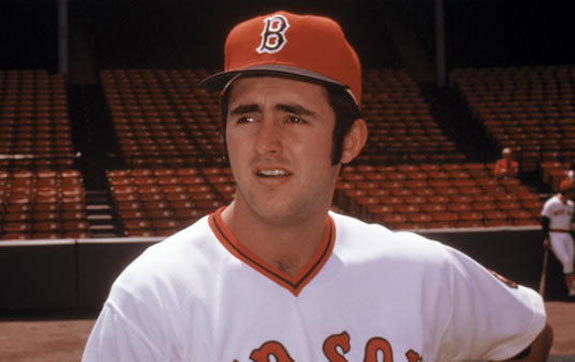
    Here is what I'm going to do: I'm going to try my best to speculate who would have won those awards in the past to compare them to Ichiro's Platinum Season. For the sake of argument, we'll stick with the MVPs officially recognized by MLB.com beginning in 1931. For the most part, this makes our job easy, because the MVP winners from 1931-1947 weren't rookies, so they are all, unfortunately, eliminated from the Platinum Season. Now, with the list of Rookies of the Year, 20 of them have gone on to win an MVP award (since the inception of the award, of course). Only two have won it in the same year: Ichiro (2001) and Fred Lynn (1975). 


    Fred Lynn is kind of an underwhelming case in baseball history. He's hit the only grand slam in All-Star Game history, one of two to ever win an MVP and ROY, and was a doubles machine until he left Boston. In his first three years with the Angels, Lynn was selected to All-Star teams but only hit .271 with 66 doubles when he hit 47 doubles his rookie year. Production fell right off the table and I think a Hall of Fame potential player disappeared. Anyway, Lynn is Ichiro's competition for the Platinum Season. 

    MVP? .331/.401/.566, 21 home runs, 105 RBIs, 103 runs, 47 doubles - Check.
    ROY? Beat teammate Jim Rice by 22 points in average, 51 points in OBP - Check.
    Gold Glove? Check.
    All-Star? Check.
    Silver Slugger? Funny you should ask. Lynn was a center fielder in 1975, his best year. The way Silver Sluggers are awarded make this a bit tricky. Since there are three outfield positions to award, the MLB doesn't pick a left fielder, right fielder, and center fielder, they just pick three outfielders who slug (hence the name). So let's see if Lynn would have held up in 1975 against other AL outfielders.

    Reggie Jackson would have been a shoo-in. Mr. October (also the strikeout king) had 36 homers, 104 RBIs, and a .511 slugging percentage. Lynn has him beat in RBIs and SLG% but it's Reggie Jackson compared to a rookie. Jackson has one of the three.

    Bobby Bonds had a statistically similar season, collecting 32 home runs, 85 RBIs and posting a .512 slugging percentage. Again, not as good as Lynn, but the increased number of home runs and slugging percentage give him the edge for the second outfield spot.

    The last competitor/candidate would be Don Baylor, who hit 25 home runs, 76 RBIs, and slugged .489. All good, but not as good as Lynn, who led all outfielders in slugging and RBIs. If I were voting, I'd give Lynn the Silver Slugger, giving him another Platinum Season. 

    Ichiro did it in 2001, and it was amazing. He blew Americans out of the water with how smoothly he transitioned from Japan to the MLB. At age 27, he led the Mariners to 114 wins in the regular season and the ALCS against Jeter's mighty Yankees. Remember how much buzz there was about Tanaka coming to the MLB this offseason? I wish I was old enough to remember how much hype their was about Ichiro and how he blew it all away.

    But Fred Lynn did it as a 23 year old straight out of USC. He played briefly at the professional level in 1974 but after a year at AA in 1973, and split time in 1974, I think his Platinum Season in 1975 was a little better. 4 years younger, almost no professional baseball. But the competition wasn't quite as good, either. 

    You be the judge. Thanks for reading. 

    Monday, February 24, 2014

    2014 Predictions: AL West

    This is a really tough division to pick. A lot of teams made a lot of of changes this year, but I still think it will be a two horse race between the A's and Rangers. Without further adieu:

    AL West
    1. Oakland 92-70
    Bob Melvin's green and yellow elephants will be, once again, in the playoffs (will we see a third straight A's/Tigers ALDS?). Last year was a very solid year for the A's, namely behind the offensive production of Josh Donaldson (.301/29/93, 4th in MVP voting). Despite their winning record, Donaldson was actually the only player to hit over .300 (other than Kurt Suzuki who played in 15 games), but they came in third in the AL in runs and home runs, so the long ball was essential to them last year. This year will be mostly the same: GM whiz kid Billy Beane did not make any major free agent pick ups, so Melvin will be putting out nearly the same lineup. Reddick and Crisp, both excellent defensive outfielders, had down years, hitting .226 and .261 respectively. Reddick was bothered with a wrist injury, resulting in a lack of hitting to the power alleys and simply a lack of playing time. Crisp's average was down but his on base percentage was right on par with the rest of his career, though his stolen bases were far down compared to his last few years in Oakland. The rotation lost 18-6 ageless wonder Bartolo Colon, but other than him, the oldest starter last year was Tommy Milone at age 26, so the future is very bright on the bump. Right now their rotation is looking like Griffin, Parker, Gray, Milone, and Straily. Very young, but a lot of potential. Last year they won 96 games, I think that's possible but not all that probable given the Mariners revamping of their roster.

    2. Texas 90-72
    The Rangers lost some key players in this offseason: AJ Pierzynski, Joe Nathan, Ian Kinsler, and Nelson Cruz. Cruz was gone most of last season and they did just fine, but there's no denying his big bat will be missed. That said, manager Ron Washington was also given a lot to work with this offseason, signing Mitch Moreland and JP Arencibia to deals, as well as outfielder Shin Soo Choo to a 7-year deal and Prince Fielder from the Tigers. There is a little bit of pressure on Fielder because of all the talk of moving to a more hitter-friendly ballpark. Last year, Comerica had a park factor of 108 and Arlington had a 102 which means that Comerica was even more friendly to hitters, but maybe the change in the atmosphere will be good for him. Andrus and Beltre will be excellent as usual, but youngster Jurickson Profar will be tried at second base. I think he'll do fine as long as he doesn't hit in the 2 slot. Choo was a hotly contested free agent, sought after by a number of teams for his crazy .423 OBP (granted, he played in a matchbox in GABP). He'll most likely play center and young stud Leonys Martin will take over in right for Cruz. The Rangers' rotation is top heavy, with Darvish (Cy Young candidate) and Derek Holland at the top. Matt Garza was a nice addition last year but he has moved on to Milwaukee, so Alexi Ogando will take over and continue the nice season he had in 2011 (13-8, 3.51 ERA). The key to the Rangers season, and this is bold, I know, is Neftali Feliz. The former ROY has oscillated back and forth from starter to closer and its taken a toll on his body, causing some lingering biceps issues last year. With Nathan gone, the closing role should be his and if he stays healthy, the Rangers could do some damage.

    3. Los Angeles 81-81
    Scioscia is an awesome manager. Last season, he had a lot of things working against him in terms of injuries (Pujols and Bourjos) and completely underperformance (Joe Blanton going 2-14). Trout will be Trout and likely go .325/.430/.560 (wow) and rub off on JB Shuck on both sides of the ball. Hamilton is a wild card, his first year in LA was not pretty, and I think he'll improve but not much. We won't see 2010's .359 average, but we won't see 2013's .250 average, either. My prediction is somewhere around .270 but with a lot of fly balls and strikeouts. Pujols will be heathy (hopefully), adding some protection, and the offseason pickup of David Freese, likely 5-hitter, will add even more. Raul Ibanez is a good addition, likely as a DH for an injection of power every once in a while. He won't put up an MVP campaign, but will have a respectable year for a 42-year old. Kendrick is a highly underrated second baseman, and I expect him to hit .310 this year. Similar to the Mariners, they are offensively challenged when it comes to catchers; between Hank Conger and Chris Ianetta, they produced 18 home runs and 60 RBIs. Signing veteran Yorvit Torrealba will aid their growth in hitting. CJ Wilson will again anchor the aging rotation, which is their weakest link. Past he and Weaver, it's a crapshoot. Ernesto Frieri was pretty shaky last year, going 2-4 with 1.4 home runs per nine. Not good. If the Angels want to win this year they will have to hit, hit, and hit some more. Last year, their team average of .264 was 3rd in the AL and their 733 runs scored was 6th.

    4. Seattle 74-88
    Oh boy. Jack Z did some work this offseason. With a solid core of King Felix, Hisashi Iwakuma, and Justin Smoak, the Mariners overloaded their artillery with offense by signing Robinson Cano, Corey Hart, and Logan Morrison.
    By adding closer Fernando Rodney, last year's shaky closer Tom Wilhemsen will be off the hook, though I don't think Seattle fans know exactly Rodney's style (walk two people, throw a wild pitch then strike out the side). Young catcher Mike Zunino will be the everyday catcher so maybe his .214 average will sneak above .250. Hard to believe last year at .214 he was Seattle's best offensive catcher. Kendrys Morales is not coming back and Justin Smoak will most likely once again barely hit .230. Signing Hart and Cano is great, but the guys around them are not there yet. They are either too young or just have too many bugs in their swing to be successful. I also don't think Cano will have as many home runs at Safeco, but he will have more doubles. Last year he hit .313/.383/.516 with 27 home runs and 107 RBIs. In a pitcher's park like Safeco, I'm guessing he'll have a .298/.365/.478 with 24 home runs and 99 RBIs, as well as a vicious chorus of boos when he goes back to the Bronx. Also, let me say I think the Mariners settled big time with hiring Lloyd McClendon. In 4.5 years managing the Pirates, he was 110 games below .500. He is not a good manager and I think they were just impatient in signing someone to man the helm. All in all, a few big names will not bring a championship. I think they'll bring a winning season (eventually) but aside from their bright stars, the future is kind of dim. 

    5. Houston 57-105
    The Astros will probably be in the basement for a few more years. Their farm system is wicked, with Mark Appel, Carlos Correa, and Jonathan Singleton, but these guys can't even drink a beer yet (well Correa can't), so they probably won't be playing professionally any time soon. As far as this year goes, Bo Porter will do what he can with what he's given. He's not a bad manager, he just has players that can't compete. Jason Castro, Jose Altuve, and acquisition Dexter Fowler are bright spots, but when your best pitcher is 4-12 with a 4.59 ERA, good things won't happen. Seeing how Fowler will adapt to the hill in center will be interesting. He's played there a few times before, when the Astros were in NL, but other than that, I'm sure he's rarely been to the Juice Box (Minute Maid Park).